In shortWear a thermal base layer, an insulating mid-layer and a windproof, waterproof shell, with a hat, gloves, a buff and sunglasses. Add high-factor sun cream and lip balm. Walking boots or trail shoes with ankle support and real grip handle the dust, ice and mud on the last section. Carry a spare warm layer, water and snacks in a small day pack.
1.2 °CJuly dawn minimum, Cusco station
4,650 mtrailhead altitude
5,036 m (16,522 ft)catalogued viewpoint altitude
5-10 amstrongest colour window
What to wear for the hike to Rainbow Mountain, layer by layer
Three garments do the work: a thermal base layer against the skin, a fleece or light insulated jacket over it, and a shell that stops wind and rain. Official reporting on Vinicunca describes thin air, intense sun and temperatures that can drop sharply, which is why those three pieces are needed in every month of the year. Leave cotton in the hotel. It soaks up sweat on the climb, then chills you while you stand at the viewpoint waiting for the light.
Hands, ears and face lose heat first on an open ridge. Pack gloves and a hat you can pull right down, plus a buff you can lift over your nose and mouth when the wind gets up on the last stretch. Sunglasses are not optional at this height. High-factor sun cream goes on before dawn, including under the chin and behind the ears, where light bounces back off dust and any snow still lying on the slope, and a lip balm with sun protection saves you from the cracked lips almost everyone brings home.
All of this gets decided the night before, because of the schedule: hotel pickups in Cusco run from about 3:00 to 4:30 am, 4:00 am being typical, on a day of roughly 12 to 14 hours. Nobody is digging through a suitcase in a dark lobby at that hour.
| Point in the day | What the records show | What is on your body |
|---|
| Hotel pickup, 3:00 to 4:30 am | Dawn minima average 1.2 °C in July and 1.9 °C in June at the Cusco airport station (3,249 m) | Base layer, mid-layer, shell, hat, gloves, buff |
|---|
| Trailhead at about 4,650 m | Open ground high above the city, with nothing to stop the wind | Everything on, shell zipped, buff up |
|---|
| The climb, 400 to 600 m of ascent | 2 to 3 hours of walking uphill as the sun comes up | Mid-layer and shell into the pack, sunglasses and sun cream on |
|---|
| Viewpoint at 5,036 m (16,522 ft) | Colour is strongest between 5 and 10 in the morning, so you stand still for a while | Spare warm layer and shell back on before the photos |
|---|
| Descent, 1.5 to 2 hours | Hard high-altitude light; Cusco's daily maxima run from 20.3 °C to 22.3 °C across the year | Base layer plus hat, sun cream and lip balm reapplied |
|---|
What shoes for Rainbow Mountain, and why poles help
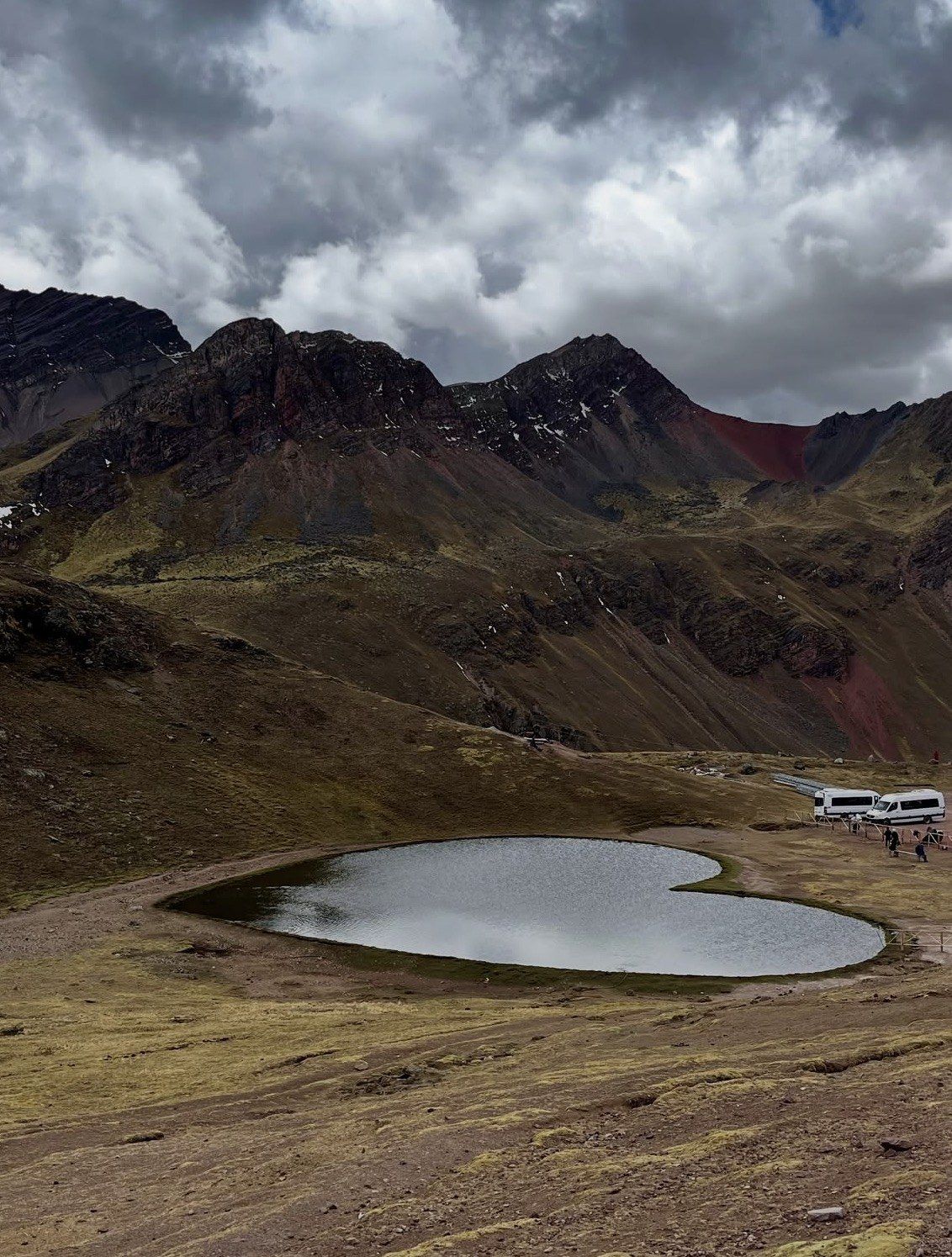
Take boots or trail shoes with ankle support and a lugged sole. From the Phulawasipata parking area at about 4,650 m the route is 6 to 7 km (3.7 to 4.3 miles) there and back, and the surface keeps changing: fine dust and loose gravel low down, wetter churned ground where the streams cross, then a steep final section and a flight of steps. Snow and rain between November and April can sit on the coloured slopes, and the same path turns to mud and patches of ice.
Smooth-soled trainers are the usual mistake. They manage the graded lower track, then slide on the steps, and everyone walks the steps whatever else they arrange on the mountain. Break new footwear in at home; a morning at 5,000 m is a bad place to discover it rubs. Wool or synthetic socks, plus a dry spare pair.
Poles are worth having for the stops rather than the climb itself. You will pause to get your breath back, and something to lean on changes those pauses. They also take load off the knees over the 1.5 to 2 hours of descent and steady you on wet or frozen ground. Walking sticks appear in the inclusions of some of the tours featured on this site, so check that before you buy anything.
- Ankle support and deep tread, worn in before the trip
- Wool or synthetic socks, plus a dry spare pair
- Gaiters only if you are travelling in the November to April wet months
- Poles for the stops, the steps and the descent
Full day with poles and oxygen carried for you
This 12-hour day from Cusco, from $22 and rated 4.9 ★ (4062 reviews), covers hotel pickup, breakfast and lunch either side of the walk, walking sticks and oxygen assistance, so your own pack comes down to clothing and water.
★ 4.9/5 · 4,062 reviews
Inside the small day pack
Keep the pack small enough that it does not fight you on the climb. Everything on this Vinicunca packing list has a job over 2 to 3 hours up and 1.5 to 2 hours down, and anything else is weight you haul to 5,036 m for nothing. Load it the night before.
Phones and cameras lose charge fast in the cold before dawn, so carry them in an inside pocket rather than clipped to a strap, and keep the battery pack in the same warm place. A rain cover, or a bin liner inside the pack, keeps the spare layer dry, which is the only reason to be carrying a spare layer at all.
Carry small notes and coins in soles as well, somewhere you can reach without unpacking. The community facilities at the trailhead run on cash, and the Red Valley viewpoint next to Vinicunca has its own local entrance, which stays a decision you make on the day.
- Water, more than you think you need, and drink it without waiting for thirst
- Snacks that survive being squashed: nuts, dried fruit, chocolate, coca sweets
- One spare warm layer, kept dry
- Rain cover or a liner bag for the pack
- Small towel and tissues
- Sun cream, lip balm, sunglasses, spare gloves
- Phone or camera in an inside pocket, with a battery pack
- Passport for the ticket and any registration
- Small soles notes and coins for the facilities and the optional Red Valley side trail
- A bag for your own rubbish, which has to leave the mountain with you
What the tours already carry
Guided day trips cover more of the kit list than people expect. The 12-hour full day from Cusco, from $22 and rated 4.9 ★ (4062 reviews), includes hotel pickup in the city centre, an air-conditioned vehicle, breakfast and lunch, walking sticks and oxygen assistance, and a professional guide in English and Spanish. What that starting price leaves out is the entrance at Vinicunca and the one at the Red Valley.
The Premium day trip runs 12 hours from $39 and is rated 4.9 ★ (2455 reviews). It adds a blanket for the drive, a first-aid kit and an oxygen mask, a hearty breakfast and a buffet lunch, and private comfortable transport with hotel pickup, with drop-off on Avenida El Sol in front of Qorikancha at the end of the day. It is the one tour here that includes the Vinicunca and Cusipata entrance, while the Red Valley entrance stays optional.
Bottled oxygen carried by a first-aid-trained guide is standard with reputable operators, and it is there for emergencies. No amount of kit makes up for arriving unacclimatised: the CDC puts the groundwork at two to three nights at around 2,450 to 2,750 m before you go higher, with mild exercise only and nothing alcoholic in your first 48 hours up high. You spend those nights at 3,399 m (11,150 ft) in Cusco, already above that band.
How the month changes the kit
Pack for May to October if the dates are yours to choose. Peru's state news agency names those months as the dry season, operators stretch the window to April through October, and they put May to September at the heart of it. June records 3.3 mm of rain across 1.0 day with at least 1 mm at the Cusco airport station, against 153.4 mm over 19.6 such days in January. The dry months are also the cold ones at dawn, which is where the near-freezing minima come from.
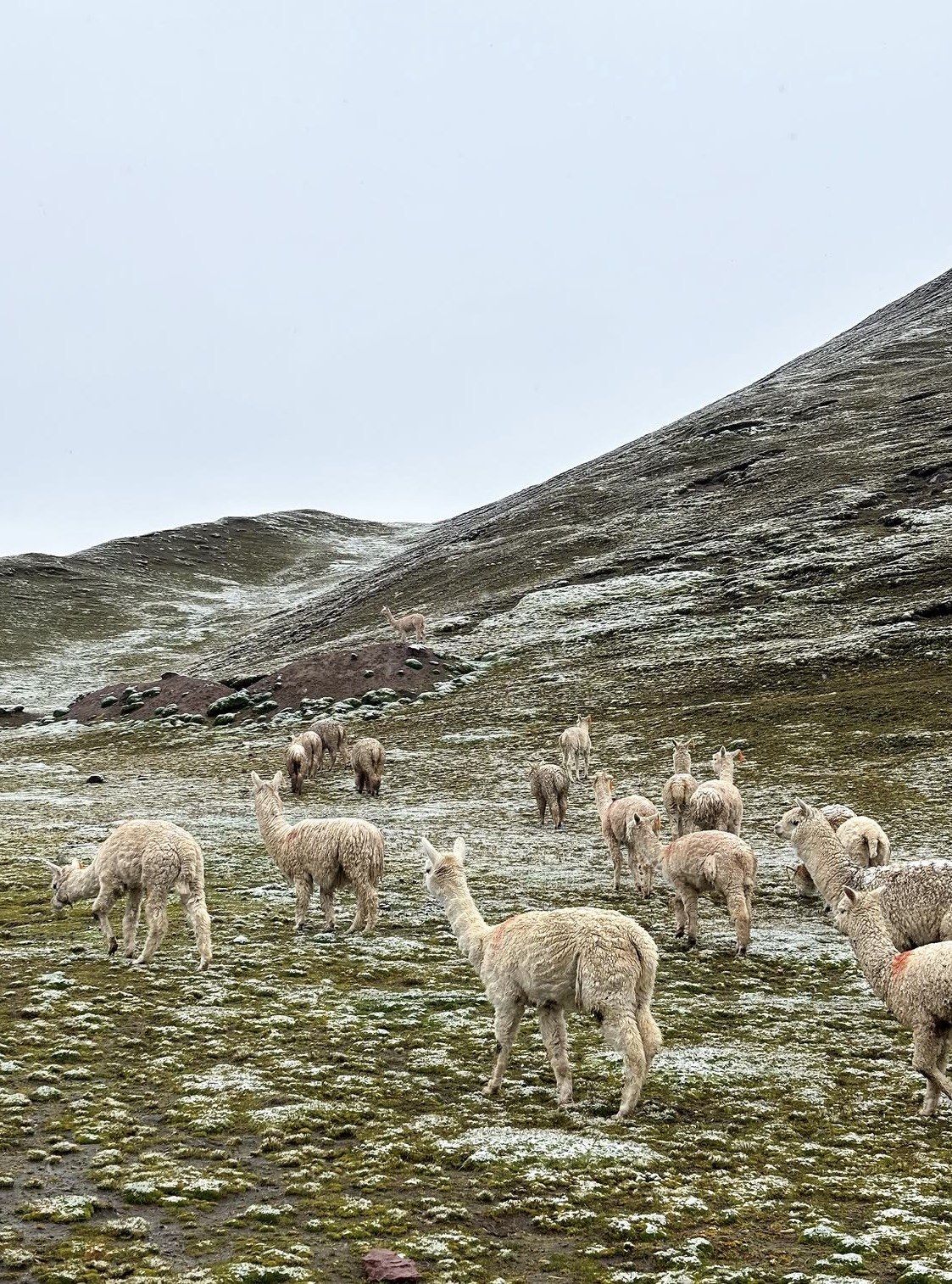
Come between November and April and you are packing for rain, and for snow that can settle over the coloured bands and slow the drive to the trailhead. On those dates the shell and the rain cover stop being insurance and become the reason the day works at all, and waterproof footwear matters as much as grip does. Heavy rain and snowfall damaged the access bridges in February 2026, with authorities evaluating a temporary suspension of visits at the time, so reconfirm your departure the day before you travel.
Wet-month nights are milder, with minima near 7.6 to 8.0 °C from November to February, while daytime maxima barely shift across the year. In those months the pre-dawn pickup is easier to dress for, and your waterproofs matter more than your warmest layer.
Rules that shape what you bring
Everything you carry up comes back down with you, wrappers included, so put a spare bag in the pack before you leave Cusco. Stay on the marked trail, leave the apachetas, the sacred stone cairns, exactly as you found them, and keep back from the edges when you are framing a photo.
Drones need a permit, so do not pack one on the assumption you can fly it at the viewpoint. Kitting out a child under 10 is worth a second thought: they get through the control point, but the walk is not recommended at that age, and there is no wheelchair-accessible section of the route to plan around.
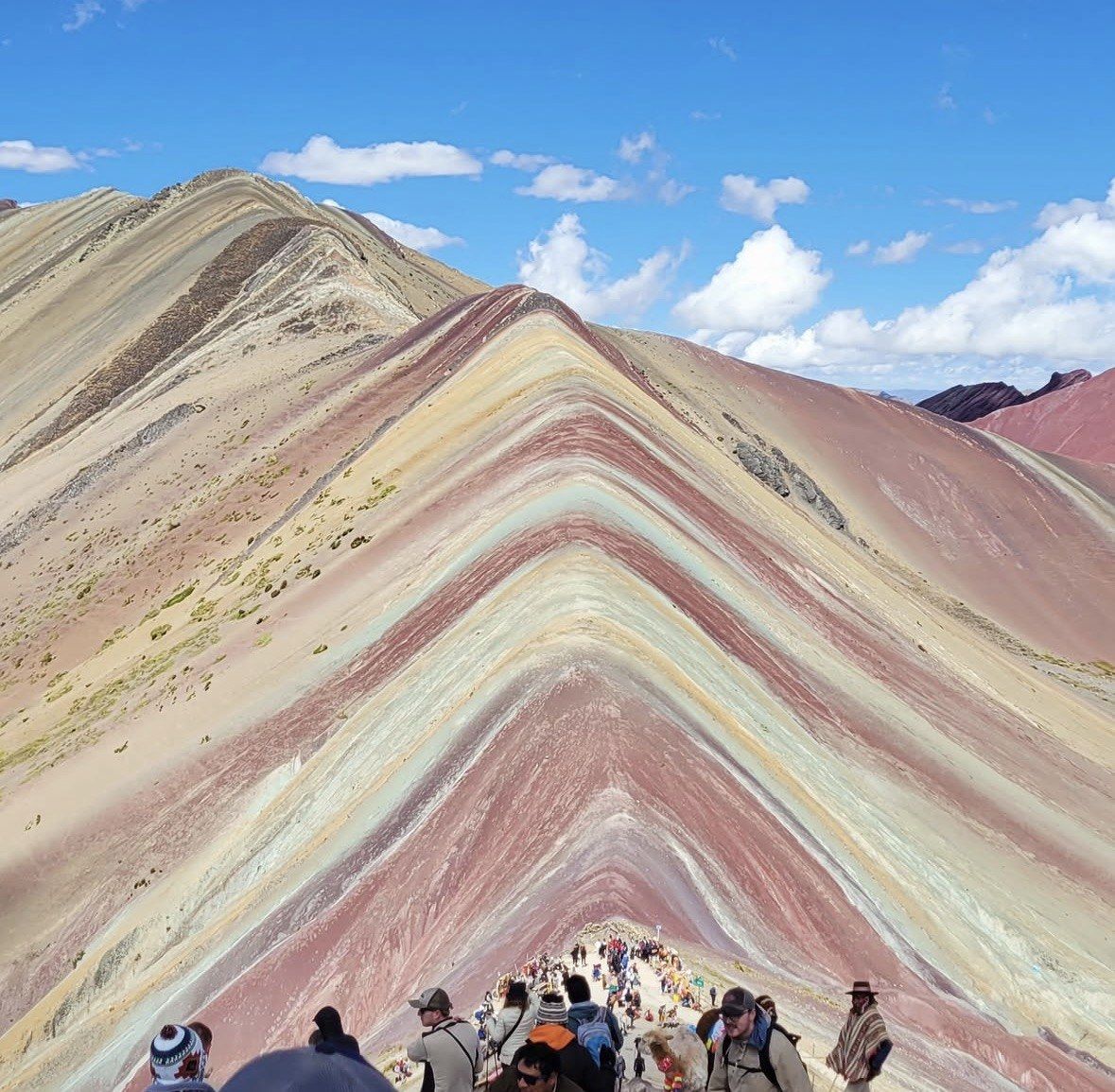
Timing is the other thing to pack for. Colour peaks in the 5 to 10 am stretch; the viewpoints fill from 9:30 am to midday, when the standard Cusco buses land one after another; both routes are reported open 6:00 am to 5:00 pm, which is worth reconfirming locally. Being dressed and ready when the vehicle arrives is what puts you on the ridge inside the colour window.
Questions people ask
What should I wear for the drive from Cusco?
Wear the full set of layers from the moment you are picked up, somewhere between 3:00 and 4:30 am. The vehicle is warm, the stops are not, and you will be out in the dark at altitude for breakfast. The Premium day trip includes a blanket for the road, which helps on a 12-hour day that starts near freezing.
Do I need a waterproof jacket in the dry season?
Take one even in June or July, when the Cusco station averages 3.3 mm of rain over a single day with at least 1 mm. Above 4,650 m the shell's real job is blocking wind while you stand at the viewpoint, and the weather up there turns within minutes. It packs down to nothing, so there is no case for leaving it behind.
Can I leave some of my things in the vehicle?
Plan on carrying what you need. The vehicle stays at the parking area while you walk 2 to 3 hours uphill and 1.5 to 2 hours back, so water, snacks, sun protection and one spare warm layer go on your back. Anything you will not use between the trailhead and the viewpoint can stay at your hotel in Cusco.
How do I stop my phone dying in the cold?
Keep it in an inside pocket under your mid-layer rather than in an outside pocket or clipped to a strap, and carry the battery pack in the same warm spot. Batteries drain fast in the pre-dawn cold and again at the viewpoint. A ziplock or small dry bag also keeps dust and melting snow off the lens.
Is sun protection really necessary that early?
Put it on before you start walking. Official reporting on Vinicunca notes thin air and intense sun alongside sharp temperature drops, in every month of the year. Use high-factor cream on face, neck, ears and the backs of the hands, wear sunglasses, choose a lip balm with sun protection, and reapply on the descent when the light is hardest.
Read also