In shortRainbow mountain weather is two climates in one morning: a near-freezing start in the dark, then hard high-altitude sun by mid-morning, with wind and fast-moving cloud on an open ridge. May to October is the dry, recommended window. The wet half of the calendar, November through April, delivers snowfall that settles over the stripes and rain heavy enough to shut the way in to the trailhead.
1.2 °CJuly mean daily minimum, Cusco airport
153.4 mmJanuary rainfall
3.3 mmJune rainfall
May to Octoberdry recommended season
Rainbow mountain weather from the dark start to midday
The coldest part of the day is the part you spend getting out of the vehicle. The nearest station with a long record is Cusco airport at 3,249 m, where mean daily minima fall to 1.2 °C in July and 1.9 °C in June, and the Phulawasipata parking area sits a long way above that. Read those numbers as the warm end of what waits for you at first light. Gloves and a hat belong in a jacket pocket before the doors open, not at the bottom of a pack you will be digging through in the dark with cold hands.
An hour into the climb the problem has reversed. Official reporting on Vinicunca is blunt about what sits up there: thin air, intense sun, and temperatures that can drop sharply without warning, so layers and sun protection are needed in every month. Cusco's daily maxima hardly move across the year, 20.3 °C in February to 22.3 °C in November, and the swing that matters to you happens inside one morning.
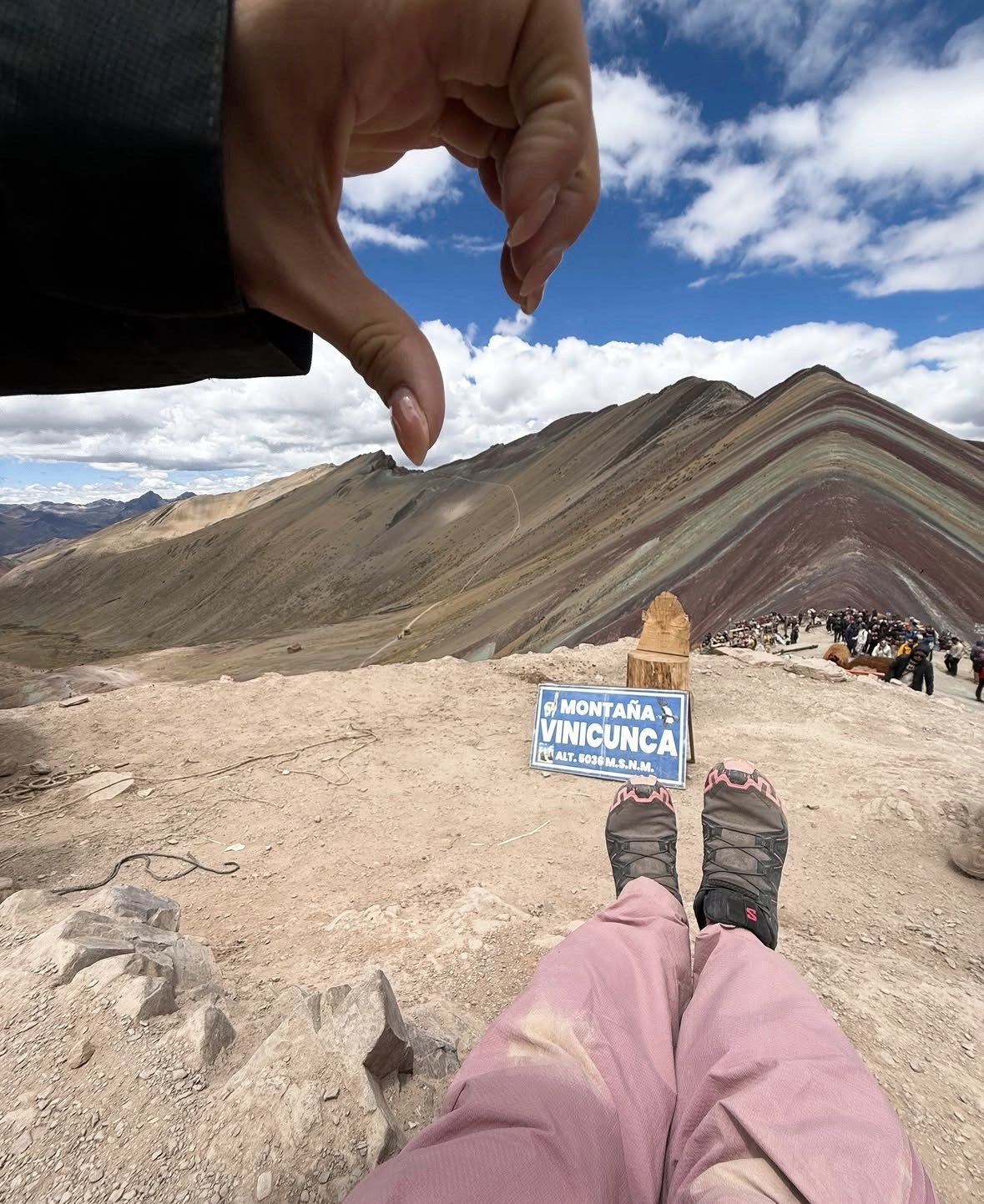
Wind runs along the top of the ridge with nothing to slow it. Cloud behaves the same way, building and clearing in minutes, so a clean sky at 7 am can be flat grey over the bands by 9. Carry a windproof outer layer you can pull on without stopping. The viewpoint is the most exposed point on the whole route, and it is also where you stand still the longest, camera out, waiting for the cloud to open. Standing still above 5,000 m in wind is colder than walking.
Weather at rainbow mountain by month
Rainfall in this corner of the Cusco region is strongly seasonal while temperature is not. January brings 153.4 mm against 3.3 mm in June, and the count of days with at least 1 mm of rain runs from 19.6 in January down to 1.0 in June. Over a full year the area records about 727.7 mm across 106.1 rain days, and almost all of that water falls between November and March. In the dry half of the calendar, June can pass with a single day of rain.
Dry-season nights are the cold ones, which catches people out. Minima sit near 7.6 to 8.0 °C in the wet months from November to February and drop to 1.2 °C in July. A January dawn is milder, and far more likely to be rained or snowed on.
| Period | Dawn minimum (Cusco airport, 3,249 m) | Rain | What it means on the mountain |
|---|
| January | near 7.6–8.0 °C | 153.4 mm, 19.6 rain days | Wettest month of the year; snow and rain can cover the coloured mountains and block access |
|---|
| February | near 7.6–8.0 °C | 17.2 rain days | Lowest daily maximum of the year at 20.3 °C; a temporary suspension of visits was under evaluation in February 2026 |
|---|
| June | 1.9 °C | 3.3 mm, 1.0 rain day | Clear skies, freezing dawns, the driest conditions in the record |
|---|
| July | 1.2 °C | 1.2 rain days | Coldest dawn month; strong sun once the light hits the ridge |
|---|
| November to December | near 7.6–8.0 °C | 17.1 rain days in December | Rain returns and road travel to the trailhead slows; November carries the year's highest daily maximum at 22.3 °C |
|---|
The cold-start option with the entrance included
On a dawn that starts near freezing, the blanket, the oxygen mask and first-aid kit, the hearty breakfast and the buffet lunch on this 12-hour Premium day trip from $39, rated 4.9 (2455 reviews), matter more than anything else in the itinerary. The Vinicunca and Cusipata entrance is already covered.
★ 4.9/5 · 2,455 reviews
Snow, rain and the months when access is in doubt
Peru's state news agency names May to October as the season to come, and says plainly that from November to April snow and rain can cover the coloured mountains and block access. Operators stretch the dry window a little, to April through October, with May to September singled out for clear skies and the strongest colour. Peru's tourism board adds the part you notice on the day itself: once the rains are running, the drive out to the trailhead gets significantly slower.
Snow at this height is ordinary in the wet half of the year, and it does two things at once. It sits on the bands and hides them, and it turns the upper section of the climb into harder work than the same ground in June. Hail can blow across the ridge with almost no warning in those months, one more reason not to be on the exposed top without a shell layer.
Closures do happen. On paper every date in the calendar is a visiting date, with exceptional cases the one exception written into that, and February 2026 showed what an exceptional case looks like in practice: heavy rain and snowfall left the access bridges damaged and officials weighing a temporary suspension of visits. That call does not sit with a single office: it is taken jointly by the Pitumarca and Cusipata municipalities together with the regional tourism authority. For you that means the operator running your departure is the practical channel for finding out whether the road and the trail are working on your date, and the night before is when to ask.
What the weather does to the colours and your photos
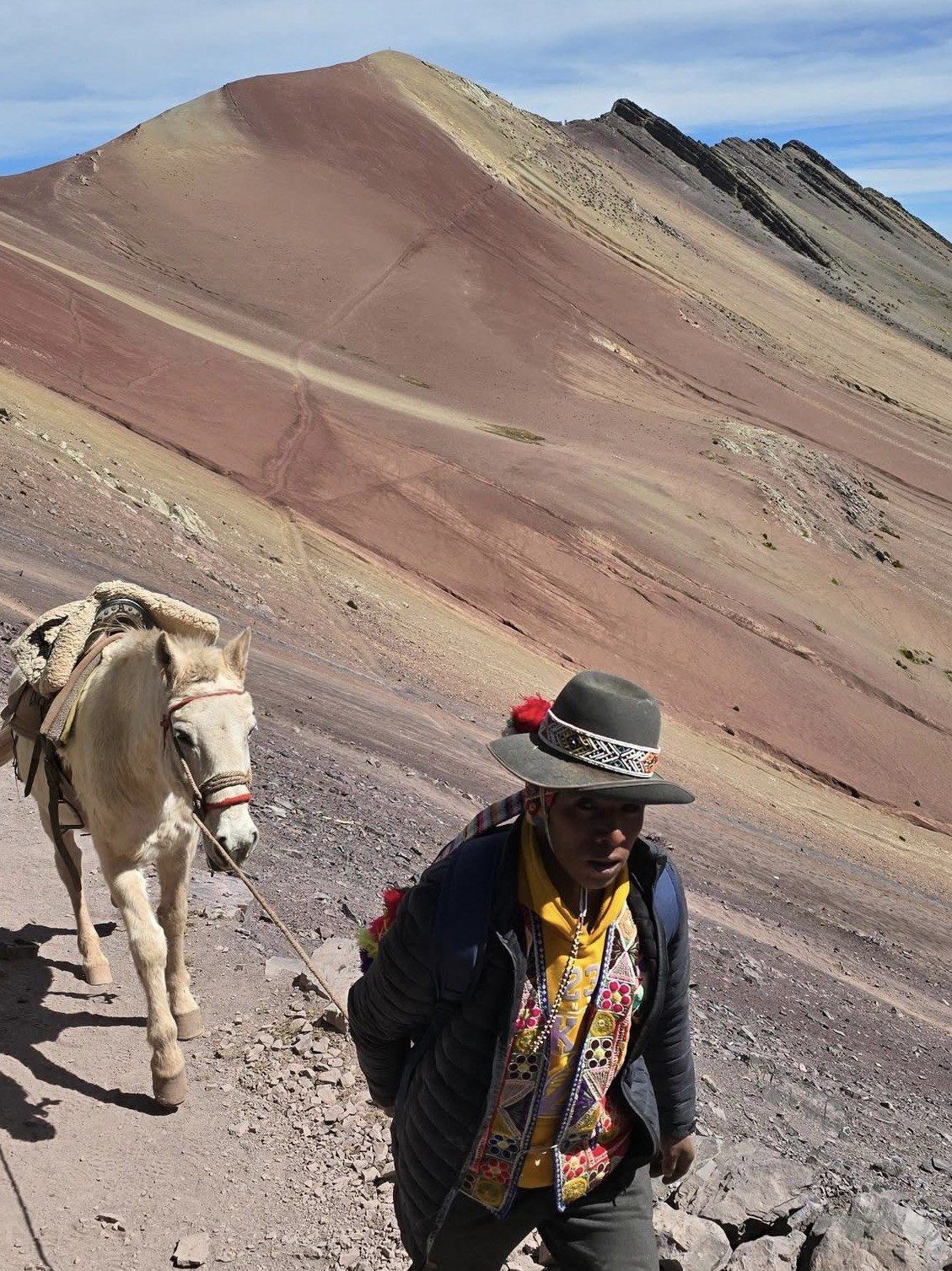
Nothing you are looking at up there is plant life. The colour is mineral, uncovered only when the glacier caps melted away by around 2013. Red comes from iron-bearing claystone, mustard yellow from calcareous sandstone rich in sulphur minerals, green from phyllite and clay rich in ferromagnesian minerals. Oxidation driven by humidity produced those tones over geological time, and the same humidity on the day you visit works against you: wet rock reads darker, and flat cloud drains the contrast between one stripe and the next.
Light is the other half of it. The colours are at their most vivid between 5 and 10 in the morning, which is the stretch the pre-dawn departures are built around. Foot traffic peaks between 9:30 am and midday as the standard buses converge, so an hour of cloud at 9 can cost you the picture and leave you waiting for it to clear at the viewpoint with everyone else waiting for the same gap.
Fresh snow changes the subject entirely. You get white over most of the bands instead of the bands themselves, and a colder, slower walk to see it, which is the argument for keeping January to March off your shortlist even if your dates move by only a week.
Shelter on the trail is whatever you carried up
There is no visitor centre at the access point and no official telephone published for it, and the route from the car park to the viewpoint crosses open slope the whole way. Once the weather turns, you either keep walking or turn round. That makes the clothing decision one you take in your hotel room at 3 am, with everything you might need already on your back before the vehicle leaves Cusco.
What the conditions ask for, in any month:
- A windproof outer layer, because the top of the ridge is the most exposed point on the route
- Gloves and a hat for the dark start, when dawn minima at the nearest station reach 1.2 °C in July
- Sun protection for the hours after the light arrives, with intense sun at this altitude noted in official reporting
- Something warm to put back on at the viewpoint, where you stop moving and the temperature drops sharply
- Waterproofs if you are travelling anywhere between November and April
Choosing your month, then booking the date
Go between May and September. April and October work as shoulder months with a decent chance of dry ground underfoot. The driest months are also the busiest ones, so expect company on the ridge: up to 1,500 visitors a day across the May to October high season, and around 600 a day once the rain sets in. Pair a June or July date with the small-hours departure and you reach the ridge inside the 5 to 10 am colour window, then start down as the standard buses arrive between 9:30 am and midday.
January to March is where bookings get wasted, and February is the month to treat as off-season outright after what happened to the access bridges in February 2026. If those dates are the only ones you have, book something you can move and reconfirm the night before: the forecast, and whether access is open on your date.
The practical sequence for most people runs like this: pick your travel window from the table above, read the packing page on this site so that both the cold start and the hard midday sun are covered, and then book a dated day trip from the tours listed here, which leaves the road, the meals and the oxygen as someone else's problem on a cold morning.
Questions people ask
Does it rain at Rainbow Mountain during the dry season?
Rarely, on the nearest long record. Cusco airport averages 1.0 rain day in June and 1.2 in July, with 3.3 mm of rainfall in June. That is no guarantee at 5,000 m, where cloud builds and clears quickly, but a dry-season morning that stays dry is the normal outcome rather than good luck.
Which is colder, the dry season or the rainy season?
The dry season, at dawn. Mean daily minima at Cusco airport fall to 1.2 °C in July and 1.9 °C in June, while the wet months of November to February stay near 7.6 to 8.0 °C. Daytime maxima barely change across the year, from 20.3 °C in February to 22.3 °C in November, so the difference you feel sits in the first hours of the day.
Do the access hours change when the weather is bad?
Weather has no effect on the published timetable: both routes are reported to work from 6:00 am to 5:00 pm, that schedule holds on every date of the year bar exceptional closures, and one Cusco operator puts last admission onto the trail at 2 pm. Bad weather does not shorten the published day, it closes it: a suspension of visits is decided jointly by the Pitumarca and Cusipata municipalities with the regional tourism office. Confirm the cut-off with your operator on the day.
What happens to a booked tour if the mountain is closed?
The two trips highlighted on this page can be cancelled at no cost up to 24 hours before the scheduled departure, so the night-before reconfirmation is also your decision point. If access is suspended or the forecast is clearly bad, cancelling inside that window costs you nothing and saves a long drive. Ask the operator whether they will move your date instead.
Is there a wet-season alternative with less exposure?
Palccoyo asks only 45 to 60 minutes on foot to a high point of 4,971 m, against round-trip hiking rated at 3 to 4 hours for Vinicunca, so you spend far less time on open ground in uncertain weather. It takes a tiny fraction of the traffic as well: Palccoyo and Pallay Punchu together see up to 70 visitors a day. The same snow that covers Vinicunca's bands between November and April can reach those slopes too.
Read also